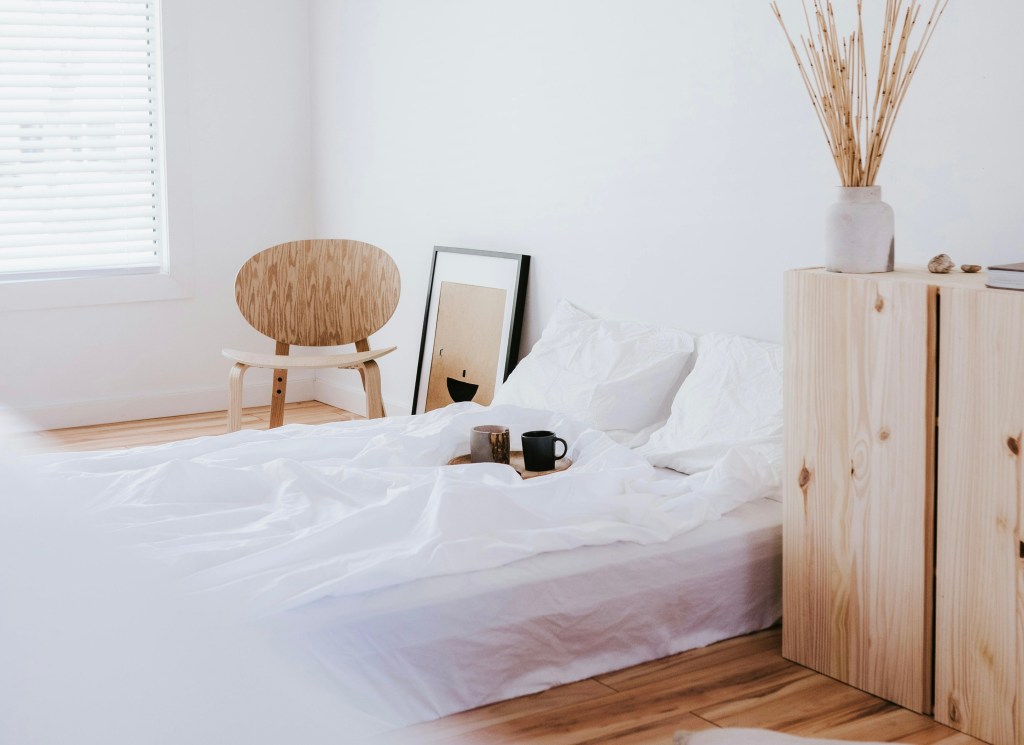
A gentle look at the room where you spend a third of your life, and small shifts that can make it feel calmer and cleaner.
We spend roughly eight hours in our bedrooms every night. While we sleep, our bodies rest, repair, and recover. The air we breathe during those hours, the materials our skin rests against, and the products we use before bed all quietly shape how we feel.
For a long time, I didn’t think about my bedroom in terms of environmental load. It was simply a place to sleep. But as I began paying closer attention to other areas of my home, the bedroom started to feel like one of the most important places to simplify.
Not because it was dangerous. But because of how much time we spend there — and how deeply our bodies are absorbing their surroundings while we rest.
Start with the Air
The bedroom is often one of the most closed-off rooms in a home. Windows stay shut overnight, ventilation is limited, and the air that circulates is the same air we breathe for hours.
A few things worth considering:
Synthetic fragrances — air fresheners, scented candles, and heavily fragranced products used in the bedroom can release compounds into the air that accumulate in an enclosed space. If your bedroom often smells strongly of fragrance, it may be worth opening a window more regularly or simplifying the products you use there.
Dust and particles — soft furnishings, carpets, and curtains accumulate dust over time. Regular airing of bedding and vacuuming with a HEPA filter can reduce the overall particle load in the room.
Ventilation — even briefly opening a window in the morning before leaving the room can make a meaningful difference to air quality over time.
Bedding and Textiles
This is an area worth giving some gentle attention to, because bedding is something our skin is in direct contact with for hours every night.
Conventional cotton bedding is often treated during production with finishing agents, softeners, and other substances. Some people with sensitive skin notice a difference when switching to certified organic cotton or linen.
GOTS-certified organic cotton and linen are both natural options that tend to be processed with fewer chemical treatments. Linen in particular is durable, breathable, and becomes softer with washing over time.
If replacing bedding feels overwhelming, start with pillowcases — they have the most direct contact with your skin and are smaller and more affordable to replace.
Washing new bedding before using it for the first time is a simple habit that can help remove surface residues from the production process.
Mattresses
Mattresses are one of the more significant — and expensive — considerations in a lower-tox bedroom. Conventional mattresses can contain synthetic foams, fire retardants, and other materials that some people prefer to avoid.
This is not an area where you need to act urgently. A mattress is a long-term investment and replacing one before it is worn out is rarely the right decision from either a financial or environmental perspective.
However, if you are in the process of choosing a new mattress, it is worth looking for certifications such as OEKO-TEX Standard 100 or GOTS, which indicate the materials have been tested for harmful substances.
In the meantime, using a certified organic or OEKO-TEX certified mattress cover can provide a barrier between you and the mattress materials.
Lighting and Electronics
The bedroom is also a space to consider light and electronic devices.
Blue light exposure from screens before sleep can interfere with melatonin production and sleep quality. This is less about toxicity and more about supporting the body’s natural rhythms — something that feels aligned with the broader intention of lower-tox living.
Electronics in the bedroom — some people prefer to charge devices outside the bedroom, or at least away from the bed. This is a personal choice, but it is one that many find contributes to a calmer, more restful space.
Lighting — choosing warmer, dimmer lighting in the evening supports the body’s transition into rest. Harsh overhead lighting or bright white light late at night can feel unsettling in a space meant for recovery.
Skincare and Personal Care Before Bed
What you apply to your skin before sleep matters, because these products remain on your skin — and therefore close to your body — for hours.
If you already pay attention to skincare ingredients, the products you use as part of your evening routine are a natural place to focus. This doesn’t mean replacing everything at once. It means noticing what you reach for most often, and whether there are gentler alternatives worth exploring over time.
A Gentle Perspective
The bedroom is a space of rest. The intention here is not to turn it into a project or a source of anxiety.
Small, gradual changes tend to be the most sustainable. Opening a window more regularly. Choosing organic pillowcases when yours wear out. Simplifying the products on your nightstand.
A lower-tox bedroom is not a perfectly curated space. It is simply a room that supports the body a little more gently while it does the quiet, essential work of recovery.
If this resonated with you, you might also enjoy reading how to create a lower-tox kitchen without replacing everything or what your clothes are made of — and why it might be worth a gentle look.
🌿
 OUREVIA
Leave a comment