Small, practical changes that reduce everyday exposure to hormone-disrupting chemicals. No need to replace everything at once.
Hormone health has become one of the most talked-about topics in wellness right now. And for good reason.
Research increasingly links everyday chemical exposure to disruptions in the hormonal system. Fertility rates are declining in many Western countries. Thyroid conditions are becoming more common. Conditions like PCOS and endometriosis are diagnosed more frequently than ever before.
There is no single cause for any of this. But environmental chemicals, specifically endocrine-disrupting chemicals or EDCs, are one piece of a complex picture that scientists are paying close attention to.
The good news is that some of the most meaningful changes are also some of the simplest. You do not need to overhaul your entire home or buy a new wardrobe. You need to know where EDCs tend to hide, and which swaps actually make a difference.
Here is where to start.
Understand What You Are Swapping Out
Before getting into specifics, it helps to understand what endocrine-disrupting chemicals actually are.
EDCs are compounds that interfere with the body’s hormonal system. They can mimic hormones, block them, or alter how they are produced and broken down. They are found in a wide range of everyday products: personal care items, plastics, cleaning products, textiles, and food packaging.
The concern is not usually a single exposure. It is the cumulative, lifelong exposure to a mixture of these chemicals that researchers are increasingly focused on. Every small reduction in everyday load matters.
If you want to read more about the science, the full post on endocrine disruptors is linked at the bottom of this article.
Swap 1: Your Body Wash and Shower Gel
Conventional body washes often contain synthetic fragrance, which can include phthalates. These are compounds used as fragrance fixatives that have been shown to have hormonal activity. Phthalates have been found in human urine, blood, and tissue in studies around the world, and women tend to have higher levels than men, partly because of their greater use of personal care products.
The swap: Choose a fragrance-free or naturally fragranced body wash. Look for products that list specific natural fragrance sources rather than simply the word fragrance or parfum. COSMOS-certified products are a reliable starting point.
Swap 2: Your Deodorant
Conventional antiperspirants work by blocking sweat ducts, often using aluminium compounds. The evidence on aluminium in deodorant and its relationship to health is still debated, but some people prefer to avoid it.
More clearly worth avoiding in deodorant are synthetic fragrances and certain parabens, which are commonly used as preservatives and have oestrogenic activity.
The swap: Look for aluminium-free deodorants with fragrance-free or naturally fragranced formulas. There are now many effective options available, though finding one that works for your body chemistry may take a little experimentation.
Swap 3: Your Food Storage
BPA and its replacements BPS and BPF are found in many plastics, including food containers, water bottles, and the lining of some canned goods. These compounds have oestrogenic activity and have been detected in human blood and tissue.
Heat increases the rate at which these chemicals leach from plastics into food and drink. Microwaving food in plastic containers, or leaving a plastic water bottle in a warm car, increases exposure.
The swap: Use glass, stainless steel, or ceramic for food and drink storage where possible. This does not need to happen all at once. Start by replacing the containers you use most often, particularly those used for hot food or drink.
Swap 4: Your Cooking Pan
Non-stick cookware is often coated with PTFE (commonly known as Teflon) or manufactured using PFAS compounds. When non-stick coatings are scratched or overheated, they can break down and release particles and fumes. PFAS are persistent in both the environment and the body, and have been linked to hormonal disruption and other health effects.
The swap: Cast iron, stainless steel, and ceramic-coated pans are widely available alternatives. Cast iron in particular is durable, long-lasting, and becomes more naturally non-stick with use over time.
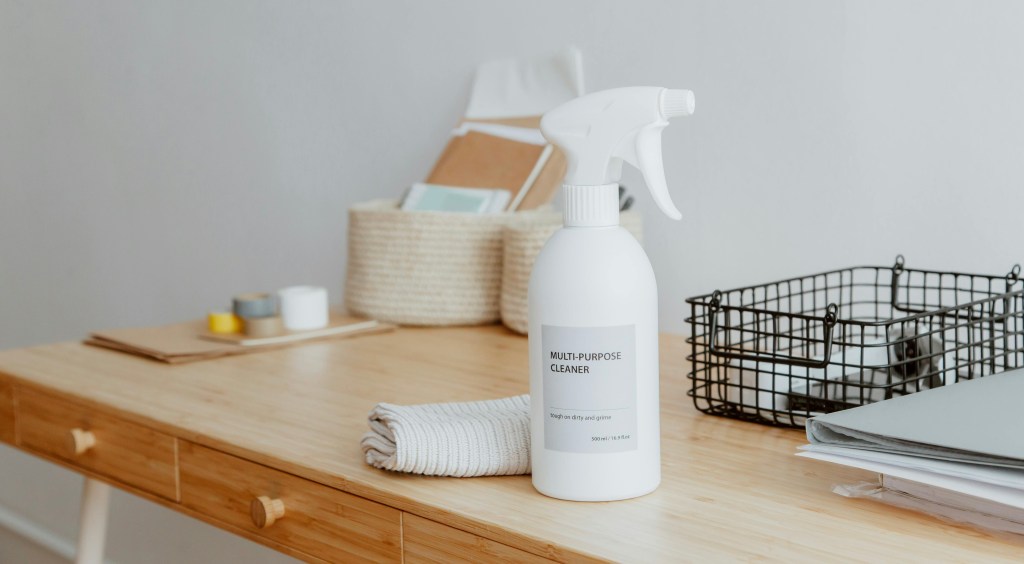
Swap 5: Your Cleaning Products
Many conventional cleaning products contain synthetic fragrances, preservatives, and surfactants that contribute to indoor air chemical load. Some also contain compounds that are known or suspected endocrine disruptors.
Cleaning products are a particularly significant source because they are used on surfaces that are touched repeatedly throughout the day, and because they release compounds into the air of enclosed spaces.
The swap: Simple cleaning products with short ingredient lists tend to be gentler on both indoor air and the hormonal system. Unscented versions of conventional cleaners are a straightforward first step. Plant-based cleaning products with transparent ingredient lists are another option.
Swap 6: Your Receipts
This one surprises many people, but thermal paper receipts are coated with BPA or its analogue BPS, both of which are absorbed through the skin on contact. Research has found that using hand sanitizer before handling receipts increases absorption significantly.
The swap: Request digital receipts where possible. Hold paper receipts from the unprinted edge. Wash hands before eating if you have handled receipts.
Swap 7: Your Synthetic Fragrance
Synthetic fragrance is one of the most pervasive sources of EDC exposure in everyday life. It appears in cleaning products, air fresheners, candles, laundry detergents, fabric softeners, and personal care products. The word fragrance or parfum on an ingredient list can represent a complex mixture of many individual compounds, some of which have hormonal activity.
The swap: Choose fragrance-free versions of the products you use most often. This single change, applied across cleaning products and personal care, is one of the most effective ways to reduce everyday EDC exposure.
A Note on Realistic Expectations
These swaps will not eliminate all EDC exposure. That is not a realistic goal, and trying to achieve it would be exhausting and counterproductive.
What they will do is reduce your everyday chemical load in meaningful, practical ways. Over time, small reductions add up. The body is always working to process and eliminate what it encounters. Giving it less to deal with is always a net positive.
Start with one swap. Use up what you already have before replacing it. Choose the change that feels most manageable for your life right now.
That is always enough to begin.
If this resonated with you, you might also enjoy reading what are endocrine disruptors and why the science demands our attention or the receipt in your hand: what thermal paper actually contains.
🌿
 OUREVIA
Leave a comment