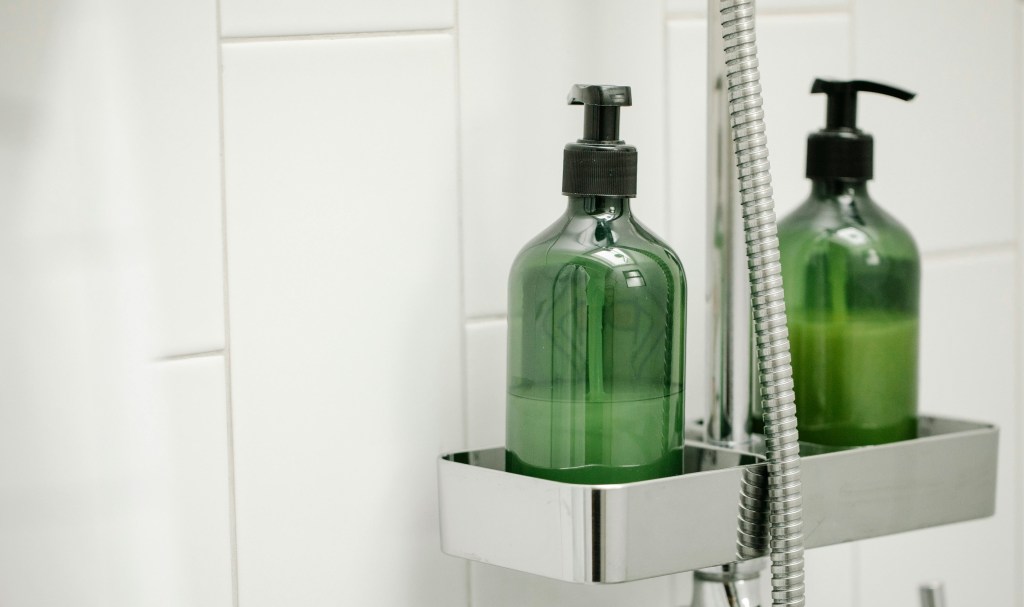
The ingredient list on the back of a shampoo bottle is one most of us have never read. Here is what hair care products actually contain and what is worth paying attention to.
Most of us use shampoo and conditioner several times a week — and most of us have never read the ingredient list. We lather, rinse, and move on, rarely pausing to think about what those hair care products actually contain, or how their ingredients interact with our scalp and hair over time.
I didn’t either, for a long time.
My curiosity started with my scalp. It had always felt a little sensitive — occasionally dry, sometimes itchy — and I had assumed it was just the way my scalp was. But when I started paying closer attention to the shampoo and conditioner I was using, I began to wonder whether the formulas themselves might be part of the picture.
That curiosity led me to read a few ingredient labels. And like many things in lower-tox living, once I started noticing, I couldn’t quite stop.
What’s Actually in Most Shampoos
Shampoo is primarily a cleansing product. Its main job is to remove oil, product buildup, and environmental particles from the hair and scalp.
To do this, most conventional shampoos contain a combination of:
Surfactants — the cleansing agents that create lather and lift away oil. The most common are sodium lauryl sulfate (SLS) and sodium laureth sulfate (SLES). These are effective cleansers, but they can also strip the scalp of its natural oils — which is why some people experience dryness, tightness, or irritation after washing. Gentler surfactants such as sodium cocoyl isethionate or decyl glucoside are increasingly used as alternatives.
Preservatives — used to prevent microbial growth and extend shelf life. Some conventional preservatives, such as certain parabens, have been the subject of ongoing research regarding hormonal activity. Many brands have moved toward alternative preservatives, though the picture is still evolving.
Fragrances — synthetic fragrance is one of the most common ingredients in hair care products and one of the least transparent. The word “fragrance” or “parfum” on an ingredient list can represent a complex mixture of many individual chemicals, not all of which are disclosed. For people with sensitive scalps or skin, fragrance is often one of the first things worth reconsidering.
Silicones — used in both shampoos and conditioners to add slip, shine, and a smooth feel. They work by coating the hair shaft. This can make hair feel soft in the short term, but some silicones build up over time and may require harsher cleansing to remove. Not all silicones behave the same way — water-soluble silicones rinse away more easily than non-soluble ones.
Conditioning agents — ingredients like behentrimonium chloride or cetearyl alcohol help detangle and soften the hair. These are generally well-tolerated.
What’s in Most Conditioners
Conditioners work differently from shampoos. Where shampoo cleanses, conditioner replenishes — coating the hair shaft to reduce friction, add moisture, and make hair easier to manage.
The ingredients of concern in conditioners tend to overlap with shampoos: fragrances, certain preservatives, and silicones. Conditioners also typically contain emollients and emulsifiers that give the product its texture and feel.
One thing worth knowing: conditioner is often a leave-on or slow-rinse product, meaning some ingredients may have more time in contact with the scalp and hair. For people with scalp sensitivity, this is a reason to pay a little extra attention to conditioner formulas.
A Note on “Natural” and “Clean” Labels
The hair care market has responded to growing consumer interest in cleaner formulas — and with it, a wave of products labelled as natural, organic, clean, or non-toxic.
These terms are not regulated in most countries. A product can call itself natural while still containing synthetic fragrances, preservatives, or other ingredients some people prefer to avoid.
Rather than relying on marketing language, it is worth looking at the ingredient list itself. Certifications such as COSMOS Organic or ECOCERT provide a more reliable signal, as they require formulas to meet specific ingredient standards.
Where to Start Without Replacing Everything
If you are curious about what is in your hair care products, a gentle starting point is to look at the ingredient list on what you already use.
A few things worth noticing:
Does your shampoo contain fragrance or parfum? If your scalp feels sensitive or reactive, this may be worth reconsidering first.
Does your conditioner contain silicones? If you notice buildup or heaviness over time, a silicone-free formula might feel lighter.
How does your scalp feel after washing? Tightness, dryness, or itchiness can sometimes be signals worth paying attention to.
You do not need to switch everything at once. When your current products run out, that is a natural moment to look at alternatives with a little more attention.
A Gentle Perspective
Hair care is personal. What works beautifully for one person may not suit another — and that is true of both conventional and lower-tox formulas.
The intention here is not to create anxiety about the products you currently use. It is simply to invite a little more curiosity.
Because when we start noticing what we put on our bodies — and how our bodies respond — something quietly shifts. We begin making choices that feel a little more intentional, a little more aligned with how we want to live.
One wash at a time.
If this resonated with you, you might also enjoy reading what’s actually in your skincare products or what your clothes are made of — and why it might be worth a gentle look.
🌿
 OUREVIA
Leave a comment