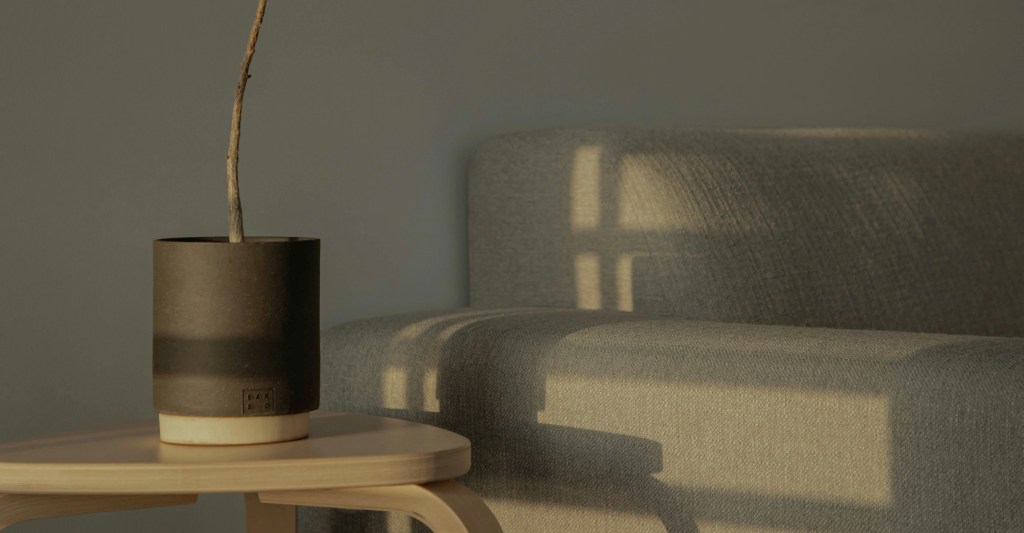
A room-by-room look at the materials and products in the most-used space in your home — and what a gentler version of it might look like.
The living room is where most of us spend a significant portion of our time at home.
It is where we rest, read, talk, and breathe — often for hours every day. And yet it is a room we rarely think about in terms of what it is actually made of.
Not the furniture style or the colour of the walls. But the materials themselves. The foam inside the sofa cushions. The finish on the coffee table. The fibres in the rug underfoot.
Let’s take a quiet walk through it.
The Sofa
The sofa is probably the piece of furniture you have most physical contact with. You sit on it, lean against it, sometimes sleep on it. And conventional sofas often contain several things worth knowing about.
Flame retardants have historically been added to the foam inside sofa cushions — particularly in countries where furniture flammability regulations have required it. Many of these flame retardants, including certain polybrominated diphenyl ethers (PBDEs), are persistent organic pollutants that accumulate in dust and in the body over time. Research has found PBDEs in human blood and breast milk, and they have been associated with thyroid disruption and developmental concerns.
The good news is that regulations have changed in many countries, and many modern sofas no longer contain the most concerning flame retardants. But older sofas — particularly those made before 2015 — may still contain them.
The fabric itself is also worth considering. Many conventional upholstery fabrics are treated with stain-resistant coatings that contain PFAS — the same “forever chemicals” found in non-stick cookware and waterproof clothing. PFAS accumulate in the body and have been linked to hormonal disruption and other adverse health effects.
What to look for: When buying a new sofa, look for GREENGUARD Gold or OEKO-TEX certified options. Natural upholstery fabrics — linen, organic cotton, wool — tend to require fewer chemical treatments than synthetic ones.
The Rug
Rugs and carpets can be significant contributors to indoor dust — and to the chemicals that settle in that dust.
Synthetic rugs — made from nylon, polyester, or polypropylene — are often treated during manufacturing with stain-resistant and anti-static coatings, some of which contain PFAS or other chemicals that off-gas into the indoor environment over time. New synthetic rugs in particular often have a noticeable chemical smell, which is a sign of off-gassing.
Studies of indoor dust have consistently found higher concentrations of flame retardants, PFAS, and other chemical compounds in homes with wall-to-wall carpeting compared to homes with hard flooring. This is partly because carpets trap and hold particles that would otherwise settle on surfaces that are easier to clean.
Wool rugs are a natural alternative that require fewer chemical treatments and do not off-gas in the same way. Wool is also naturally flame-resistant without chemical additives.
What to look for: If replacing a rug, natural fibre options — wool, jute, cotton — tend to be lower-tox choices. Vacuuming with a HEPA filter regularly reduces the chemical load in carpet dust.
The Coffee Table and Furniture Surfaces
Wooden furniture — particularly flat-pack and composite wood furniture — is often made from MDF, particleboard, or plywood bonded with formaldehyde-based adhesives. Formaldehyde is a known irritant and, at higher exposures, a carcinogen. It off-gasses from composite wood products, particularly when they are new.
The rate of off-gassing decreases significantly over time — most of it occurs in the first few years after manufacture. This means that older furniture is generally less of a concern than new flat-pack pieces.
Furniture finishes and paints can also contribute to indoor air quality. Conventional paints and varnishes often contain volatile organic compounds (VOCs) that off-gas into the air. Low-VOC and zero-VOC paints are widely available and make a meaningful difference in enclosed spaces.
What to look for: Solid wood furniture tends to off-gas less than composite wood. When painting or refinishing furniture, choosing low-VOC products reduces the chemical load in the air.
The Curtains and Textiles
Curtains, cushion covers, throws, and other soft textiles in the living room are another area worth gentle attention.
Many conventional textiles are treated with wrinkle-resistant, water-repellent, or stain-resistant finishes — some of which contain formaldehyde or PFAS. Textiles that have a noticeable chemical smell when new, or that are marketed as “easy care,” “crease-resistant,” or “stain-proof,” are most likely to have been treated with these finishes.
Washing new textiles before using them is a simple step that removes some surface residues. Natural fibres — linen, organic cotton, wool — tend to require fewer finishing treatments than synthetic ones.
The Electronics
The television, speakers, gaming consoles, and other electronics in the living room are made from plastics and circuit boards that often contain flame retardants — including brominated compounds that have been associated with hormonal disruption.
These flame retardants migrate out of electronics over time and can be found in indoor dust. Wiping electronics regularly with a damp cloth and ensuring good ventilation in rooms with a lot of electronics reduces exposure.
This is not a reason to remove electronics from your home. It is simply a reason to dust and ventilate regularly — habits that are easy to adopt and make a genuine difference.
The Air Itself
The living room air is affected by everything in it — the furniture, the textiles, the cleaning products used on surfaces, the candles or air fresheners used to make it smell pleasant.
Opening windows regularly — even briefly — is one of the most effective things you can do for indoor air quality. Studies consistently show that homes with regular ventilation have lower concentrations of indoor air pollutants than those that are kept closed.
If you use scented candles, paraffin candles with synthetic fragrance are worth reconsidering. Paraffin is a petroleum byproduct, and synthetic fragrance can release compounds into the air. Beeswax or soy candles with natural fragrance — or no fragrance — are gentler alternatives.
The Room You Come Home to
The goal of this walk-through is not to make your living room feel like a source of anxiety.
Most of us live with furniture and textiles that contain some of these materials — and that is fine. The cumulative load matters far more than any single item, and making gradual, informed choices over time is far more sustainable than trying to replace everything at once.
But knowing what is in the room where you spend so much of your life feels like useful information. And small changes — regular ventilation, a HEPA vacuum, choosing natural fibres when replacing things — add up quietly over time.
If this resonated with you, you might also enjoy reading what are endocrine disruptors — and why the science demands our attention or how to make your bedroom a lower-tox space.
🌿
 OUREVIA
Leave a comment