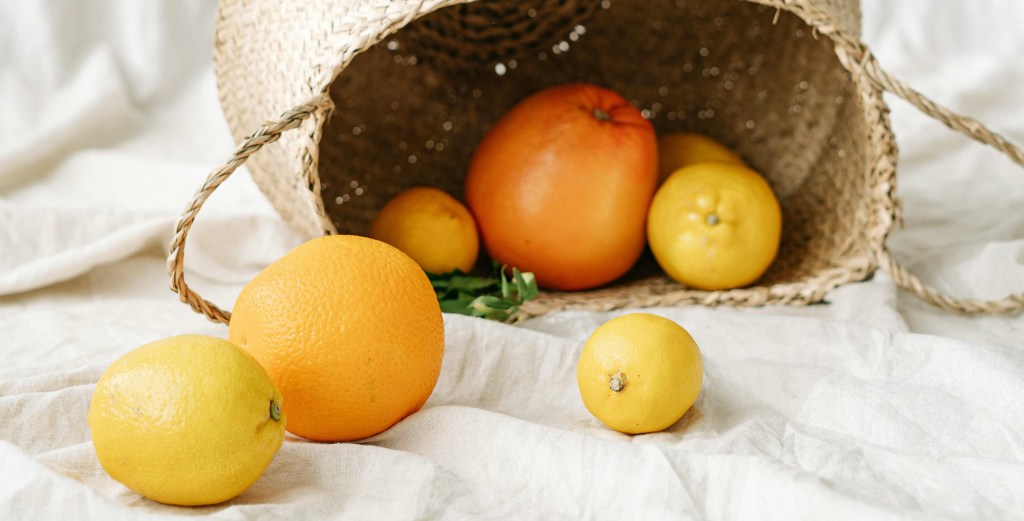
Most people rinse their fruit under the tap and consider it clean. Research suggests there is a more effective approach, and it costs almost nothing.
Pesticide residues on conventionally grown fruit and vegetables are one of those topics that can feel either alarmist or dismissive depending on where you read about it.
The reality sits somewhere in the middle.
Pesticide residues are present on a significant proportion of conventionally grown produce. The concentrations found are generally within regulatory limits. But those limits are set for individual pesticides, not for the mixture of multiple residues that a person actually consumes across a day of eating. And for certain populations, particularly young children and pregnant women, even low-level cumulative exposure is worth taking seriously.
Washing produce does not eliminate all pesticide residues. But it reduces them. And some washing methods are considerably more effective than others.
Here is what the research says.
Why Tap Water Alone Is Not Enough
Rinsing fruit under running tap water removes dirt, surface bacteria, and some pesticide residue. But many pesticides are specifically designed to resist rain and washing. They adhere strongly to the surface of fruit and vegetables, and some penetrate beyond the surface into the peel itself.
Studies consistently find that plain water removes only a fraction of pesticide residues. A 2025 peer-reviewed study by the Environmental Working Group, which analysed multiple washing methods, found that while all methods reduced pesticide levels to some degree, soaking in a baking soda solution was significantly more effective than rinsing or soaking in plain water.
Why Baking Soda Works
Baking soda, or sodium bicarbonate, is an alkaline compound. Most pesticides are not chemically stable in alkaline conditions. When produce is soaked in a baking soda solution, the alkalinity breaks down the pesticide molecules on the surface, making them easier to rinse away.
A study published in the Journal of Agricultural and Food Chemistry by researchers at the University of Massachusetts found that soaking apples in a one percent baking soda solution for 12 to 15 minutes removed significantly more pesticide residue than either tap water or a bleach solution. For surface pesticides, the baking soda solution was the most effective method tested.
A 2025 study published in the journal Foods investigated multiple household washing agents including corn starch, flour, rice flour, and baking soda. Soaking in two percent corn starch followed by soaking in five percent baking soda was the most effective homemade strategy, removing 94.13 percent of the pesticide thiabendazole.
A peer-reviewed study by Environmental Working Group scientists found that soaking produce in a baking soda or vinegar solution was more effective than soaking or rinsing in plain water, on average.
What Baking Soda Cannot Do
It is important to be clear about the limits of this method.
Some pesticides penetrate beyond the surface of fruit into the peel and flesh. Research found that thiabendazole, a fungicide designed to absorb into fruit flesh, penetrated to a depth of 80 micrometres into apple peel. Twenty percent of the applied thiabendazole remained after washing regardless of method.
This means that washing, however thorough, cannot remove pesticides that have already been absorbed into the fruit. For pesticides that penetrate deeply, peeling is the only way to remove the residue, though peeling also removes fibre, nutrients, and other beneficial compounds found in the skin.
The baking soda method is most effective for surface residues. It is a meaningful reduction, not a complete elimination.
How to Do It
The method is simple and inexpensive.
Fill a large bowl with cold water. Add one teaspoon of baking soda per two cups of water and stir to dissolve. Place the fruit in the solution and soak for 12 to 15 minutes. For berries, reduce the soaking time to two to three minutes to prevent them from softening. After soaking, rub the surface gently with your hands or a soft brush, then rinse thoroughly under clean running water.
This method works well for apples, pears, peaches, grapes, and other fruit with a skin. For produce with a rough or porous surface like strawberries, the method is still useful but penetration is harder to address.
A note on concentration: research used solutions of around one percent baking soda, which is approximately one teaspoon per two cups of water. Using significantly more baking soda does not appear to meaningfully improve results, and very high concentrations can affect the texture of delicate fruit.
Which Fruits Are Worth Prioritising
Not all produce carries the same pesticide load. The Environmental Working Group publishes an annual Dirty Dozen list of the conventionally grown fruits and vegetables found to carry the highest pesticide residues. In recent years this list has consistently included strawberries, spinach, peaches, pears, nectarines, apples, grapes, and bell peppers.
If you buy some organic and some conventional produce, prioritising organic for the items on the Dirty Dozen list while using the baking soda wash for everything else is a practical and cost-effective approach.
A Simple Habit Worth Keeping
The baking soda wash takes about fifteen minutes and costs almost nothing. It is the kind of small, evidence-based habit that fits naturally into a lower-tox approach to everyday life.
It will not make conventional produce equivalent to organic in terms of pesticide load. But it will meaningfully reduce the surface residues on the fruit you eat, particularly for the pesticides that respond to alkaline conditions.
Simple, affordable, and supported by research. That is about as good as a kitchen habit gets.
If this resonated with you, you might also enjoy reading what are endocrine disruptors and why the science demands our attention or simple swaps for better hormone health.
🌿
Research references used in this post:
• Li et al. (2017). Effectiveness of Commercial and Homemade Washing Agents in Removing Pesticide Residues on and in Apples. Journal of Agricultural and Food Chemistry, 65(44), 9744–9752.
• de Montagnac et al. (2026). Produce washing options can reduce pesticide residue. Environmental Working Group, peer-reviewed study.
• Zarqaoui et al. (2025). Efficacy of Household and Commercial Washing Agents in Removing the Pesticide Thiabendazole Residues from Fruits. Foods, 14(2), 318.
 OUREVIA
Leave a comment